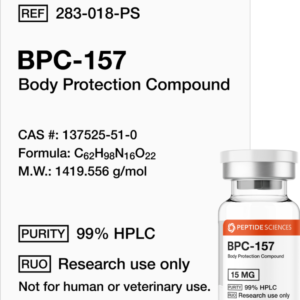
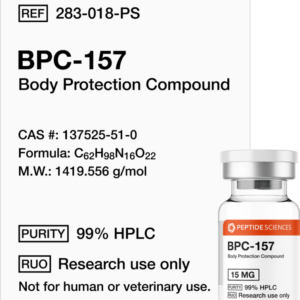
BPC-157
BPC-157 is a synthetic pentadecapeptide (15 amino acids) originally identified as a fragment sequence associated with larger gastric-derived “body protection compound” research. In laboratory settings, BPC-157 is studied as a research peptide for exploring cellular signaling involved in tissue response to injury, including pathways related to fibroblast activity, extracellular matrix (ECM) organization, and endothelial cell behavior.
BPC-157
Preclinical and in vitro studies commonly evaluate BPC-157 in models that measure cell migration, cell survival, angiogenesis-related signaling, and oxidative stress biomarkers under controlled conditions. Because these endpoints are quantifiable in cell culture systems and animal models, BPC-157 is frequently used to probe mechanisms of tissue repair biology, vascular recruitment/collateralization, and inflammation-linked signaling cascades, without implying human outcomes.
For research use only. Not for human consumption.
References:
Sikiric P et al., Curr Pharm Des, 2018;24(18):2002–2030
Kang EA et al., Dig Dis Sci, 2013;58:3310–3317
Seiwerth S et al., Biomedicines, 2018;6(3):75
Reviews
There are no reviews yet.